


Selecting a high‑voltage control cabinet (HV cabinet) is not a decision you can afford to get wrong. A mismatch in key specifications can lead to catastrophic failures, costly downtime, or even safety hazards. Here are the three core parameters that demand your full attention — and how Huadong Industry Control ensures every cabinet meets your exact needs.
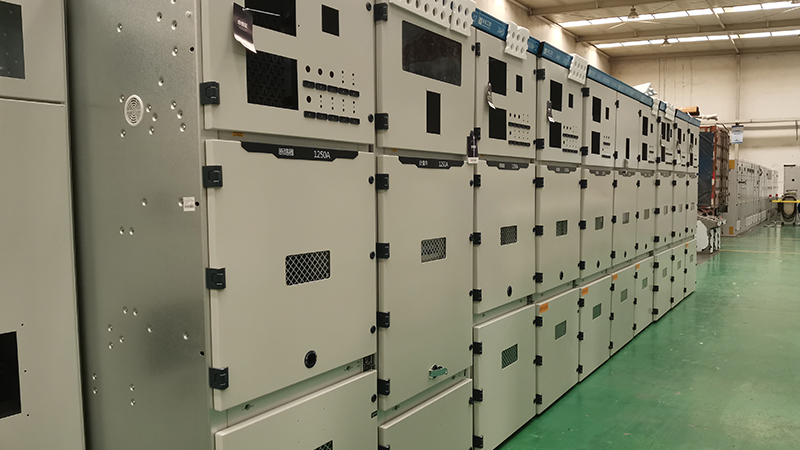
Parameter 1: Rated Voltage – Match Your System Voltage Exactly
The rated voltage of the cabinet must align with your grid’s nominal voltage and its maximum operating voltage (including temporary overvoltages).
What to verify: Is the cabinet rated for 6kV, 10kV, 35kV, or other? Does it account for the actual fluctuation range at your site?
Common mistake: Assuming a “standard” voltage fits all. In many regions, actual grid levels vary — a cabinet rated for 10kV may not safely handle 12kV peaks.
Why it matters: Under‑rated insulation can lead to partial discharge, tracking, and eventual phase‑to‑phase faults.
Huadong’s approach: We design each HV cabinet with a voltage margin and perform dielectric tests (power frequency and lightning impulse) to verify insulation integrity under your specific grid conditions.
Parameter 2: Rated Short‑Circuit Withstand Current – Don’t Underestimate Fault Conditions
This parameter determines how much fault current the cabinet can endure for a short duration (usually 1‑4 seconds) without mechanical or thermal damage. It includes both the peak (dynamic) and RMS (thermal) values.
What to verify: What is the maximum symmetrical short‑circuit current at your installation point? Your cabinet’s withstand rating must be equal to or higher than that value.
Common mistake: Specifying a cabinet based on normal load current only, ignoring the upstream transformer capacity and grid impedance.
Why it matters: If the withstand current is too low, a short‑circuit can blow the busbars, rupture enclosures, or weld contacts — causing widespread damage and prolonged outages.
Huadong’s approach: We calculate the prospective short‑circuit level based on your transformer and line data, then select busbars, supports, and circuit breakers with adequate dynamic and thermal ratings. Every design is verified by short‑circuit withstand simulation.
Parameter 3: Degree of Protection (IP Code) – Choose for Your Environment
The IP rating defines the cabinet’s resistance to solid objects and water ingress. It directly affects long‑term reliability.
What to verify: Will the cabinet be indoors (IP40/IP42), outdoors (IP54/IP55), or in highly dusty/humid areas (IP65 or higher)? Consider also corrosion from chemicals or salt spray.
Common mistake: Opting for a lower IP rating to save cost, only to face frequent cleaning, contact oxidation, and insulation degradation.
Why it matters: Ingress of dust or moisture can reduce creepage distances, cause tracking, and trip protection systems unexpectedly.
Huadong’s approach: We offer IP ratings from IP40 to IP66, with sealed enclosures, proper gaskets, and corrosion‑resistant coatings. For harsh environments, we add forced‑air or heat‑exchange cooling while maintaining the required IP level.

Why Choose Huadong Industry Control for High‑Voltage Cabinets?
Pre‑sale engineering support – We collect your grid data and environmental conditions to propose the correct ratings.
Full‑type testing – Our cabinets undergo independent third‑party tests to IEC or local standards.
Customized IP solutions – We match protection grade to your specific site, not a one‑size‑fits‑all.
Transparent reporting – You receive test reports, schematics, and maintenance guides with every order.
Don’t leave your HV cabinet selection to guesswork. Contact Huadong Industry Control with your system parameters — we’ll help you define the three core values correctly and deliver a cabinet that performs safely for decades.


